
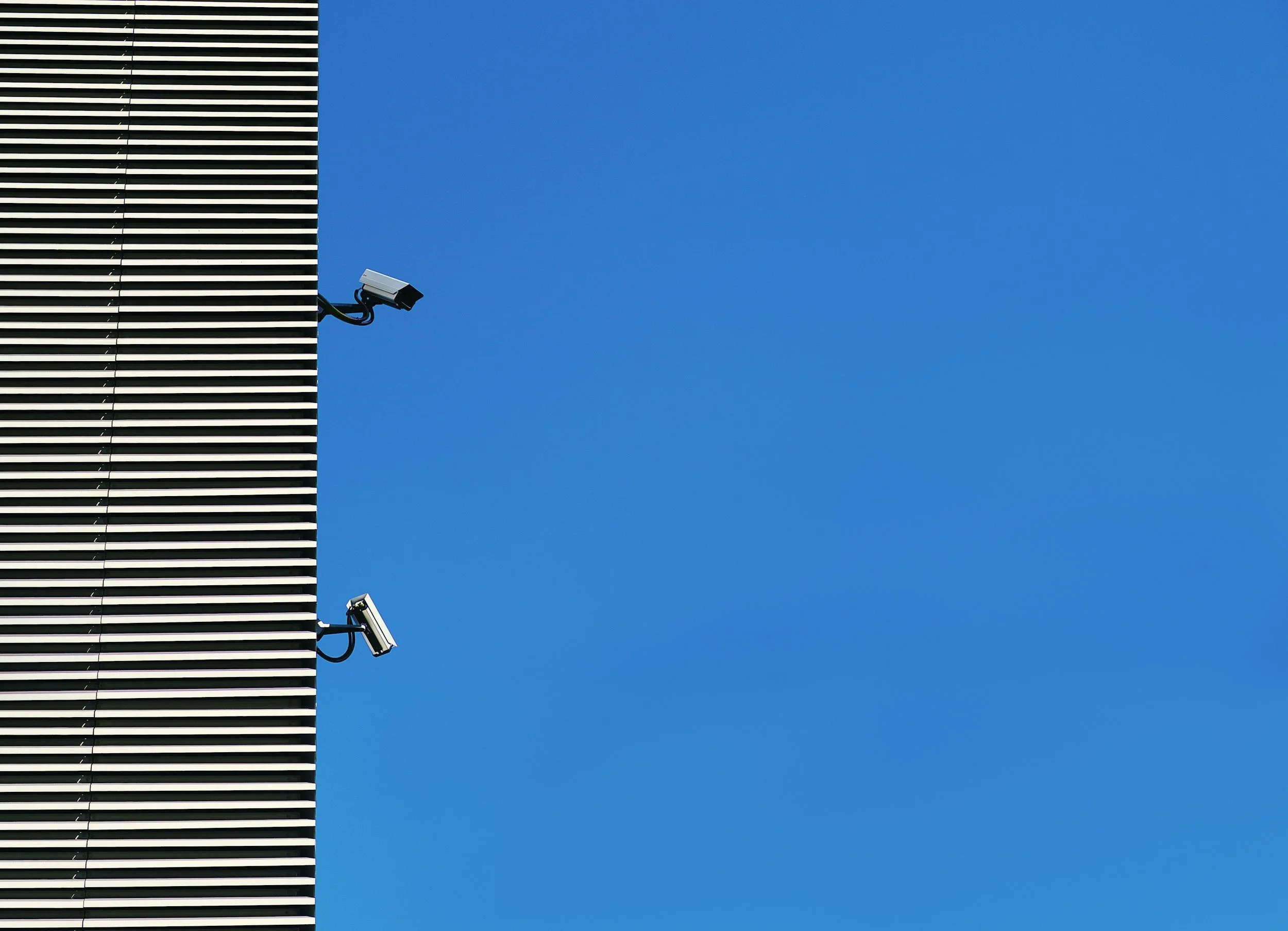
You have probably figured out by now that I have a huge curiosity quotient – I mean, huge. Things intrigue me and trigger my innate desire to find out more, and so I go exploring and researching which I enjoy. I just have to know. And so, here I was this week reading one of my news feeds to ensure that I keep up-to-date with what’s going on in the world. There was an article about facial recognition technologies and how supermarkets and other retailers, such as Bunnings, are increasingly utilising this technology to minimise theft and maximise staff safety. Retail theft has become a major cost to retailers in general. The article was on the ABC’s online news platform, and was entitled, “Facial recognition technology 'scope creep' is upon us, experts warn”, and was written by journalists, Daniela Pizzirani and Dannielle Maguire.
The article reported that in August this year Coles and Woolworths supermarkets rolled out facial recognition technology trials in a bid to combat crime with about a third of retail workers not feeling safe in their workplace. This was according to a union survey of 3000 employees in the retail sector. Coles reported that incidences of abuse towards their staff had increased 85% in the last two years in Victoria alone. They believe that facial recognition technology is one of the best ways to combat this and create a deterrent for would-be offenders. The facial recognition technology scans the features of a person’s face and creates a unique digital code that identifies them in a database from then on. Now, whilst both supermarket chains are not saying that they are definitely going to roll out this new technology in an effort to protect staff and minimise theft, it’s a fair bet in my view that such technology will eventually be deployed – and not just with Coles and Woolworths but many other retailers as well. On the one hand I understand the frustration that retailers have in trying to minimise theft and maximise staff safety. This is, on the surface of it, a justifiable concern. But whilst these retail giants are arguing that this is all about staff safety experts are warning that such technology is the thin edge of the wedge, so to speak. The intention is to go much further than staff safety.
As I read further in this article, I realised what the term, “scope creep”, was - and then my alarm bells started going off. The issue that has AI technology experts worried is that once such technologies are installed and common place and “normal”, “scope creep” becomes an issue because it does not stop. This term, “scope creep” grabbed my attention (because I’m curious). The more I read the more I understood this whole issue of “scope creep” is far bigger than we might realise. I had never heard of this terminology before and so I went researching. It turns out that “scope creep” is a term that has been around for some time along with other kinds of “creep” like “bracket creep” which has to do with wage increases creeping into higher tax brackets. Anyway, up to this point I had not come across “scope creep” which is quite specific. “Scope creep” is a thing. So, what is it? Well, this will probably not surprise you. In simple terms, scope creep is the uncontrolled expansion of a project's requirements, goals, or deliverables after the work has already started. Scope creep can occur when stakeholders in a project, or clients, make casual "quick additions" that are never officially approved, yet they are still introduced and often the taxpayer is saddled with the end result. Is this starting to sound familiar? Often on government projects budget blowouts are caused by scope creep. That is, once a project is underway and other unapproved adjustments are made on a regular basis (and justified in all sorts of ways without telling the public), scope creep occurs and obviously this increases the overall costs which are euphemistically called blowouts. I guess that this is pretty easy to understand in terms of some construction projects or similar. However, this term, scope creep, does not only apply just to construction projects and such. It’s been happening for a long time in apparently innocuous ways. Other forms of scope creep have been common place for years in the fields of software development. For example, every time you have a software update on your computer or phone this is actually scope creep. Sure software bugs and security issues rectified, however many “updates” eventually render your device unsupportable – and a new device is required.
AI experts are warning of a much more insidious kind of scope creep when it comes to facial recognition technology deployment. With scope creep who’s to say that unique digital identifiers will not soon be used for marketing purposes where customers are actually surveilled, and shopping habits exploited, even controlled? And worse. These are critical personal privacy issues. Scope creep, also known as function creep, is when society incrementally allows things to happen over time in such a way that people don’t feel uncomfortable about it until it’s too late. Responsible Technology policy specialist Lauren Perry from the University of Technology Sydney said this week, "We let it pass and all of a sudden you see a layering of the technology being used for more privacy-intrusive purposes." She is very concerned that facial scanning could easily shift from safety and security measures to customer experience evaluation in ways that could disadvantage and harm the consumer. So, where does all this scope creep end? Will there come a day when every single person who walks into a supermarket has to give up sensitive biometric data just to buy a can of baked beans? Facial data gives companies far more information about consumer purchasing behaviour and how they move through a store, paving the way for options like discriminatory pricing, for example, according to Ms Perry. She also went on to say, "Now they have your face, they have your loyalty card, your bank card, they can piece together a pretty clear picture of individual shopping behaviours", and exploit these. There's no telling where all this could land in say 5 or 10 years’ time, is there? Scope creep is rapidly advancing towards surveillance of consumer behaviour in an unprecedented way. One of the biggest issues here is that Australia has no dedicated facial recognition technology laws in place at all, the federal government inability to ban so-called “smart glasses” with video capability is proof. Scope creep is quite a real danger. What starts out as ostensibly “staff protection” easily morphs into consumer surveillance – and worse. Anyway, apart from facial recognition technologies and so on, this whole idea of scope creep began to fascinate me. What other kinds of scope creep are there? Well a list could go on and on. And then I began to think about other forms of scope creep.
When it comes to Christians and the issue of sin, I began to see scope creep as a much bigger issue than the overreach of the use of facial recognition technologies. On our personal “scope” for what is acceptable behaviour - what is sin, and what is not - is scope creep a thing? I think it can be. When certain sins become normal and routine such that we don’t even bat an eye any more, scope creep can incrementally allow other sins in that soon become normal and routine. And before we know it our spiritual life is in serious trouble. We tolerate certain “small” sins until these are normal, or we learn to happily accommodate them, and then through incrementalism more “small” or “justifiable” sins make our list. The issue of “believer’s scope creep” is really willingness to tolerate demonically induced thought patterns. In fact, we allow these thought patterns and as we do so more and more we lose spiritual sensitivity. Just like consumers are conditioned over time to accept the overreach of facial recognition technology. In the end, no one questions it. This is nothing new, of course, as the apostle Paul revealed.
Ephesians 4:17-23 (NIV)
“So I tell you this, and insist on it in the Lord, that you must no longer live as the Gentiles do, in the futility of their thinking. 18 They are darkened in their understanding and separated from the life of God because of the ignorance that is in them due to the hardening of their hearts. 19 Having lost all sensitivity, they have given themselves over to sensuality so as to indulge in every kind of impurity, and they are full of greed. 20 That, however, is not the way of life you learned 21 when you heard about Christ and were taught in Him in accordance with the truth that is in Jesus. 22 You were taught, with regard to your former way of life, to put off your old self, which is being corrupted by its deceitful desires; 23 to be made new in the attitude of your minds; …”
Be aware of “believer’s scope creep” and what it does. It is a relentless incrementalism by which our spiritual sensitivity is eventually destroyed. Stay ever vigilant and do not allow any sin to become normal in any way - because this is the beginning of the end.
Ps Milton
[Sources: ABC news website; Wikipedia; UT Sydney; Shop, Distributive and Allied Employees Association Union, website: https://www.sda.au/vic/submissions/sda-research-customer-abuse-and-violence-2025-reports/]