
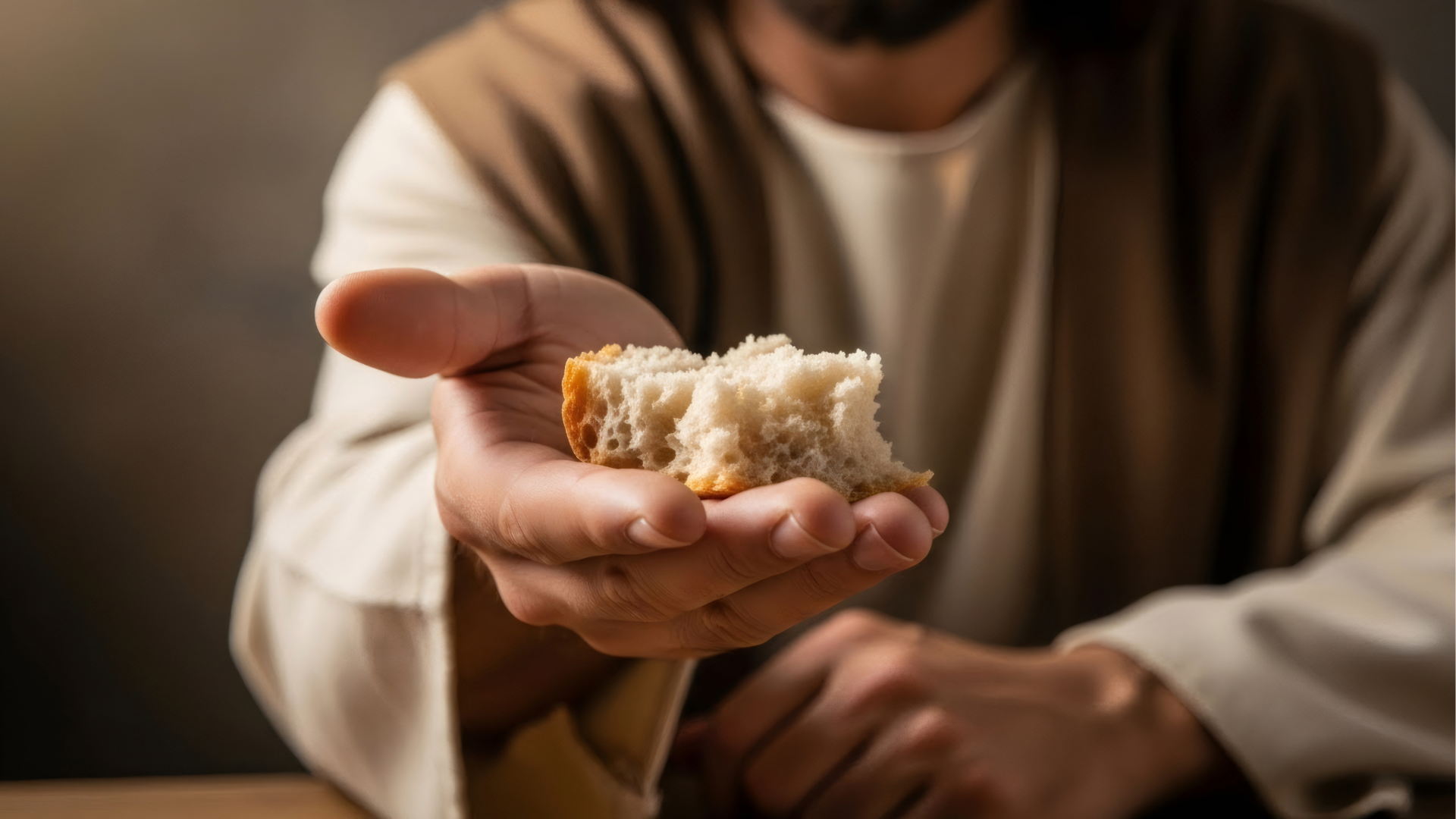
We are approaching Easter – we’re less than a month away. I know! I have begun my personal annual Easter pilgrimage through the Gospels tracing that last week before the death of Jesus, the Christ. Every year I do this as an act of personal consecration – getting rid of any distractions, dealing with sin and so on, getting focused so that I am really ready for Good Friday, and Resurrection Sunday.
There are always new experiences of worship, revelation and initiation awaiting me. There is nothing quite like the worship at Easter time. This worship is in a league of its own. There is always some new revelation of God’s grace and love, too …
John 3:16 (NLT)
“For this is how God loved the world: He gave His one and only Son, so that everyone who believes in Him will not perish but have eternal life.”
Those words penned by the apostle John yield fresh grace each year at Easter … because Easter is not merely an historical event, it was an event that released cosmic force and eternal effect. Easter transcends time. And so, even though on earth we commemorate the cross and the resurrection of Christ, the very act of remembering causes it to come alive to us in very real ways. It is a holy spiritual thing. This is why the celebration of the Lord’s Supper is so powerful when approached in fear and trembling. The grace of God mediated to us when we participate in the sacrament of the Lord’s Supper is always fresh – the blessing never fades.
One of the passages in the Gospels that narrates the last supper Jesus had with the twelve disciples never ceases to amaze and fascinate me. Here He was with them, He knows full well that within the next twenty-four hours He will be dying on a Roman cross – crucified for the sins of all humanity, for all time – and eternity. Yet, He says this …
Luke 22:15 (NIV)
And He said to them, "I have eagerly desired to eat this Passover with you before I suffer.”
“Eagerly desired”? That is still a stunning thing to read. Only Luke records this of Jesus that night. “Eagerly”? What can this possibly mean as the cross looms large this night, and Jesus knowing they will all disown Him and flee. Yet, “I have eagerly desired …” Why “eagerly desired”? It begs many questions, for me anyway.
I have come to two main conclusions about what Jesus meant by “eagerly desired”. The first is, despite the horror of the cross before Him, in His humanity, He surely wanted it to be all over as soon as possible – the time had finally come. The cross is now right on top of Him. And second, He wanted to share this special meal with this band of disciples He had come to know and love. But this Passover supper would be the last one ever, in the Kingdom of God scheme of things. Jesus was about to transform the Passover – a Jewish ordinance that had been celebrated for more than a thousand years – into something new.
Jesus, in His pre-incarnation state, had waited with the Father in heaven, then had come to earth, lived and ministered for some thirty-three earth years, and now the time for the great inauguration of a new covenant was here – at this very supper. A new ceremony was about to supersede Passover and all future remembrances would recall the shed blood of the Lamb of God, and not the blood of lambs splashed on the doorposts and lintels of the homes of Jews enslaved in Egypt centuries before. This night “Passover” would transition to “Lord’s Supper”. Jesus had eagerly awaited this moment when a new and eternal covenant was instituted – a better covenant than the former. This new ordinance would be for a new people of God – the redeemed from amongst not just Jews but Gentiles, too …
“For God so loved the world …”
Jesus had eagerly desired to share this moment with His disciples where the matzah bread (bread baked without any yeast symbolising Israel’s rushed departure from Egypt that fateful night, as there was no time to bake bread with yeast) would now symbolise His own body given in sacrifice … which was no rushed and frantic thing. It had been planned ever since the first crunching of forbidden fruit in Eden.
Luke 22:19 (NIV)
And Jesus took bread, gave thanks and broke it, and gave it to them, saying, “This is My body given for you; do this in remembrance of Me.”
These men had celebrated Passover many times from childhood and had never heard such words before as Jesus attaches a whole new meaning to the matzah. And from that night forward this “new” Passover has been celebrated by all followers of Jesus Christ. From then on the bread symbolised His body which He had given to carry the sins of the world.
Isaiah 53:6 (NLT)
“All of us, like sheep, have strayed away. We have left God’s paths to follow our own. Yet the LORD laid on Him the sins of us all.”
Christ carried our sins on His body – they were transferred to Him, so that God’s wrath could fulfil His holy law. He bore them - away.
1 Peter 2:24 (NLT)
“He personally carried our sins in His body on the cross so that we can be dead to sin and live for what is right. By His wounds you are healed.”
Jesus had eagerly desired to eat this Passover with them, because it would be the last one that would ever carry any temporary redemptive value. A new covenant, a new order of things was instituted this night … it carried eternal efficacy …
Hebrews 12:24 (NLT)
“You have come to Jesus, the one who mediates the new covenant between God and people, and to the sprinkled blood, which speaks of forgiveness instead of crying out for vengeance like the blood of Abel.”
… and the next day it was sealed with His own blood.
John 19:28-30 (NLT)
Jesus knew that His mission was now finished, and to fulfill Scripture He said, “I am thirsty.” 29 A jar of sour wine was sitting there, so they soaked a sponge in it, put it on a hyssop branch, and held it up to His lips. 30 When Jesus had tasted it, He said, “It is finished!” Then He bowed His head and gave up His spirit.
We consecrate ourselves well before we dare to come to participate in the Lord’s Supper, so that we properly reverence Him, and remember what He has done for us, and so that we never mishandle this sacrament.
And He eagerly desires to meet with us, still … every time we do so.
Ps Milton