
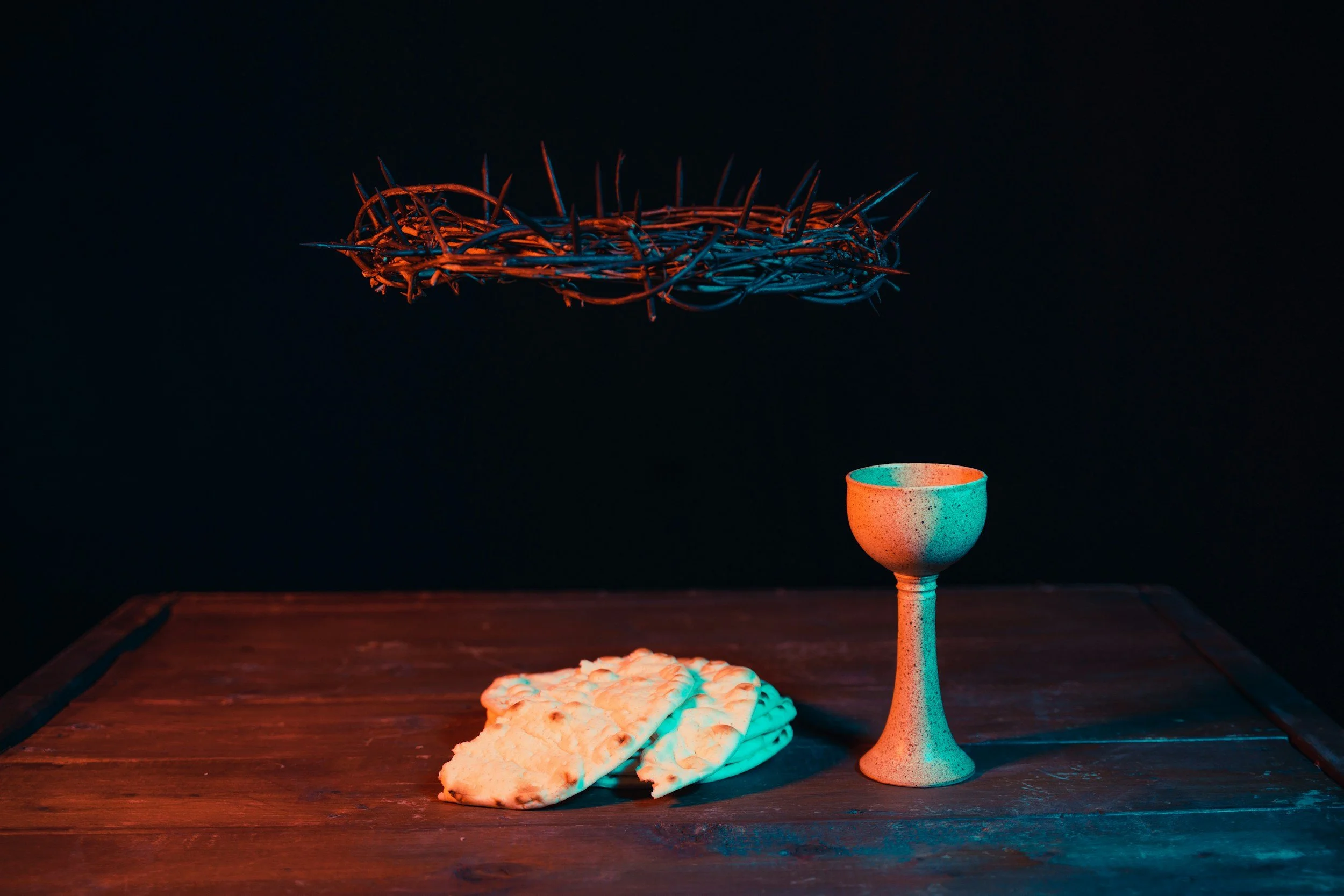
Easter, on our calendar, is now behind us. But Easter is never over. Because the cross and the resurrection are never over. Easter will never be over. Of course, at one time in human history the actual event of the crucifixion of Christ occurred, and that is over. There is plenty of historical evidence (even ancient Roman documentation exists!) that this occurred. And there is plenty of historical evidence, including eyewitness accounts, that attest to the event of the resurrection as well … early on the third day.
The historical evidence of these two events is crucial, of course, but they are more than just historical events. The main reason for this is that God was in Christ, and God is eternal.
2 Corinthians 5:19 (NLT
“For God was in Christ, reconciling the world to Himself, no longer counting people’s sins against them. And He gave us this wonderful message of reconciliation.”
Colossians 2:9-10 (NIV)
“For in Christ all the fullness of the Deity lives in bodily form, 10 and in Christ you have been brought to fullness. He is the head over every power and authority.”
The eternal God was in Christ. The eternal God is Christ as John’s Gospel reminds us in the opening lines …
John 1:1 (NIV)
“In the beginning was the Word, and the Word was with God, and the Word was God.”
And,
John 1:14 (NIV)
“The Word became flesh and made His dwelling among us.”
And so, the eternal God inserted Himself into human history in Jesus Christ – this is an inarguable historical fact. But history and time cannot contain the eternal or limit it in any way, which is just plain logical. The work and effect of the cross of Christ is not limited by time, and neither is the resurrection of Christ. These two events spill over and outside a date in history into eternity which is more than everlasting future. Consider for a moment the words of the apostle Paul to the Romans …
Romans 5:21 (NIV)
“so that, just as sin reigned in death, so also grace might reign through righteousness to bring eternal life through Jesus Christ our Lord.”
Sin occurred in time, certainly, although we don’t know the date. But sin was not confined by time, at all. Paul says here, “sin reigned in death” – the sin condition shot straight past the eating of forbidden fruit. It now reigned and not just on earth, in time. Which is why the power of the cross and the resurrection is not confined in time, either. The writer to the Hebrews made this point, too.
Hebrews 10:10 (ESV)
“And by that will we have been sanctified through the offering of the body of Jesus Christ once for all.”
The one ancient Greek word translated “once [and] for all” is ephapax (ἐφάπαξ) and it means an act that occurs only once and needs no repetition. It’s a perfect act. Whether describing Christ’s atoning death, His resurrection appearances, or the believer’s sanctification, this word marks an event whose efficacy is complete and whose results are enduring. They don’t stop. Some translations say, “once and for all time”, which is incorrect. The word for time is simply not in the text here and, in the whole context of Hebrews, ephapax means that the sacrificial death of Christ was a once-off event in time that has eternal and unstoppable force beyond time in eternity – in all directions. Eternity is not just future. And that’s the point. The “once for all” death and resurrection of Jesus Christ are eternal in force beyond history, time and the cosmos. The word also means “all at once” in the sense of a perfectly completed act that needs no repeating and affects eternity, not just time.
Which brings me to the sacrament of the Lord’s Supper. When we participate in communion having carefully and properly consecrated ourselves in reverent fear of God, we are doing much more than commemorating a purely historical event - we are participating in something eternal. That is, we are participating in the continuing, eternal force and divine effect of the work of the cross and the power of Christ’s resurrection. These have tremendous power. It is not magical or super-religious. It is divine and supernatural. It is a participation in an ‘ephapax’. We need to be very, very aware of this. When Jesus, at that last supper, took bread and broke it and said,
Luke 22:19 (NIV) "… do this in remembrance of me."
… He instituted an enduring sacramental experience for all believers there and then, and for those who would also believe in Him and participate in the Lord’s Supper, down through the centuries. Which is why it was instituted. The word used for “remembrance” here by Luke, is anamnēsis [ἀνάμνησις] which is a bit more than remembering a past event like a birthday. Anamnēsis means to bring to mind and recollect and enter into the power of the historical event which has eternal force and, at the same time, experience its enduring power. In the moment. This is an active, intentional, participatory recalling rather than passive memory. If we enter into Lord’s Supper with such an attitude and with proper consecration, God mediates something fresh and new of His grace, in the moment. We meet very personally with the risen Lord – it is His “supper”. This is rich blessing, indeed. This is what the apostle Paul was getting at when he said …
1 Corinthians 10:16 (NIV)
“Is not the cup of thanksgiving for which we give thanks a participation in the blood of Christ? And is not the bread that we break a participation in the body of Christ?”
Something new and fresh about the death of Christ is mediated to us, something new and increasing is imparted to us when we participate in the death and resurrection of Christ in the Lord’s Supper. This is communion. Not ceremony. We can do ceremony without any communion at all, and that is a travesty. Which is why we should never partake of the Lord’s Supper in any routine, casual, disconnected or ritualistic way. It is a participatory experience with Jesus. And it is always new. Because Easter is eternal. We need to take this most seriously, friends, and properly consecrate ourselves in readiness to give thanks and receive the blessing of Easter whenever we meet to remember. It should never be an unthinking, ill-considered act. There is no value in that, and great danger.
1 Corinthians 11:28 (NIV)
“Everyone ought to examine themselves before they eat of the bread and drink from the cup.”
There is no blessing when participation is not a consecrated, humble act of worship.
1 Corinthians 10:21 (NIV)
“You cannot drink the cup of the Lord and the cup of demons too; you cannot have a part in both the Lord's table and the table of demons.”
Think on these things, come consecrated and ready to meet and commune with Jesus when we gather to participate in Lord’s Supper.
Ps Milton